
Knowing when a sourdough starter is at peak activity is essential for successful baking. But for many bakers this raises another question: what exactly is “peak”, and how can you recognize it?
In another article we explained when a sourdough starter is ready to bake and why timing alone is not a reliable indicator. However, even after understanding the theory, many bakers still struggle with the practical side: what does the starter actually look like at its strongest point?
A sourdough starter changes gradually as it ferments. It begins to rise, becomes increasingly airy, reaches maximum expansion, and then eventually starts to fall.
During fermentation, gas produced by yeast becomes trapped inside the structure of the starter. Because the starter sits in a jar, fermentation activity usually becomes visible from the bottom upward, as gas accumulates and expands the structure. As the rise progresses, bubbles appear throughout the entire height of the starter.
In this visual guide, we will look at the key stages of that process and show how a sourdough starter develops from the beginning of the rise to its true peak.
Stage 1 — Early Rise
After feeding, fermentation begins slowly. At first the starter still looks relatively dense. Small bubbles start to appear and the starter rises slightly above its starting level, but the structure is still compact.
At this stage the microorganisms are becoming active, but the starter is still far from peak fermentation.
Stage 2 — Active Rise
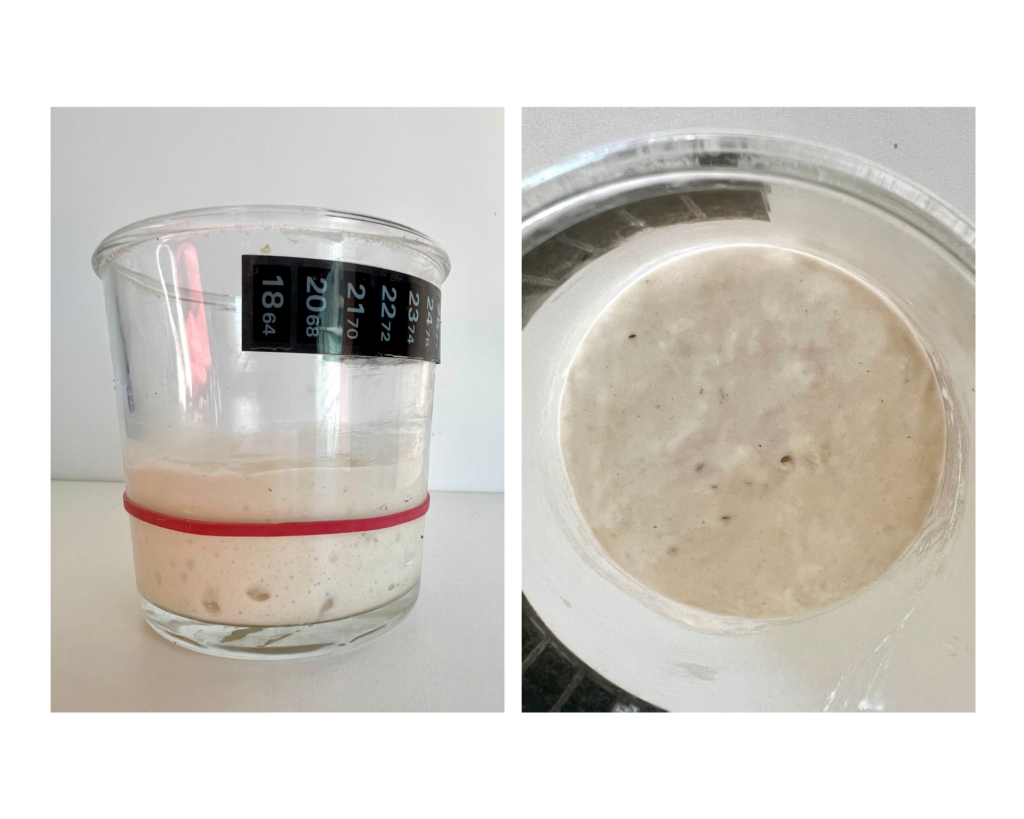
As fermentation accelerates, gas production increases and the starter rises more quickly. Bubbles become more visible along the sides of the jar and the texture becomes lighter.
The starter is now clearly expanding as carbon dioxide accumulates inside the structure.
Stage 3 — Approaching Peak
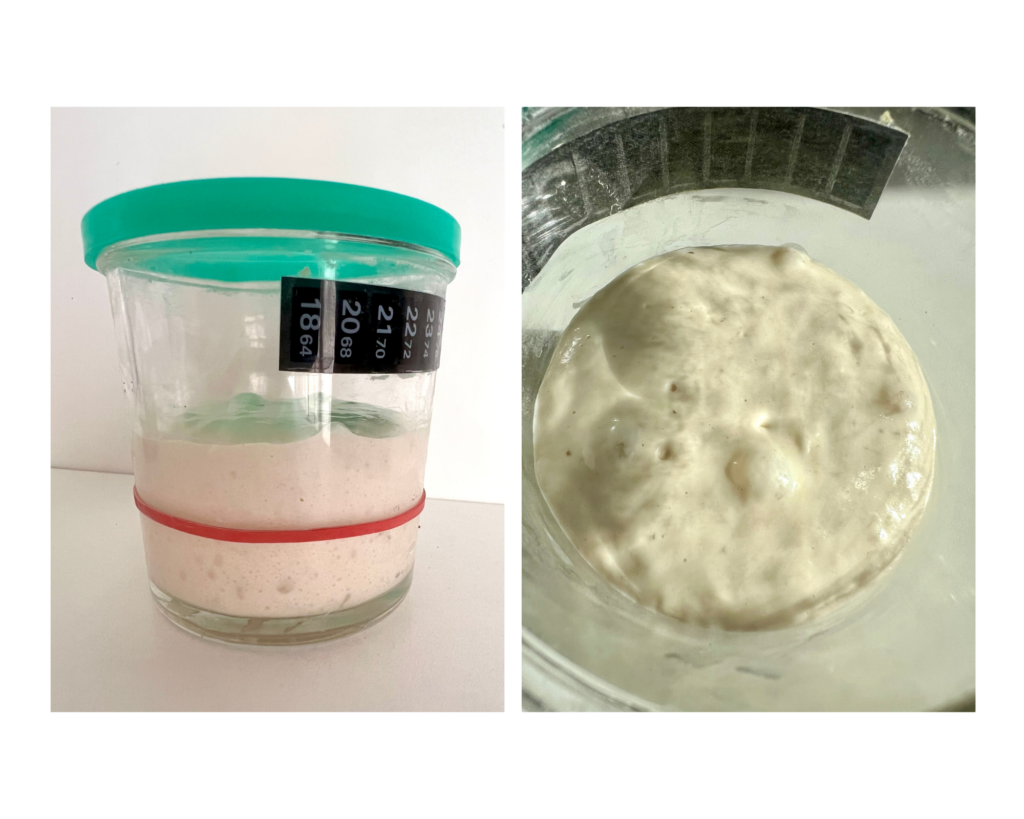
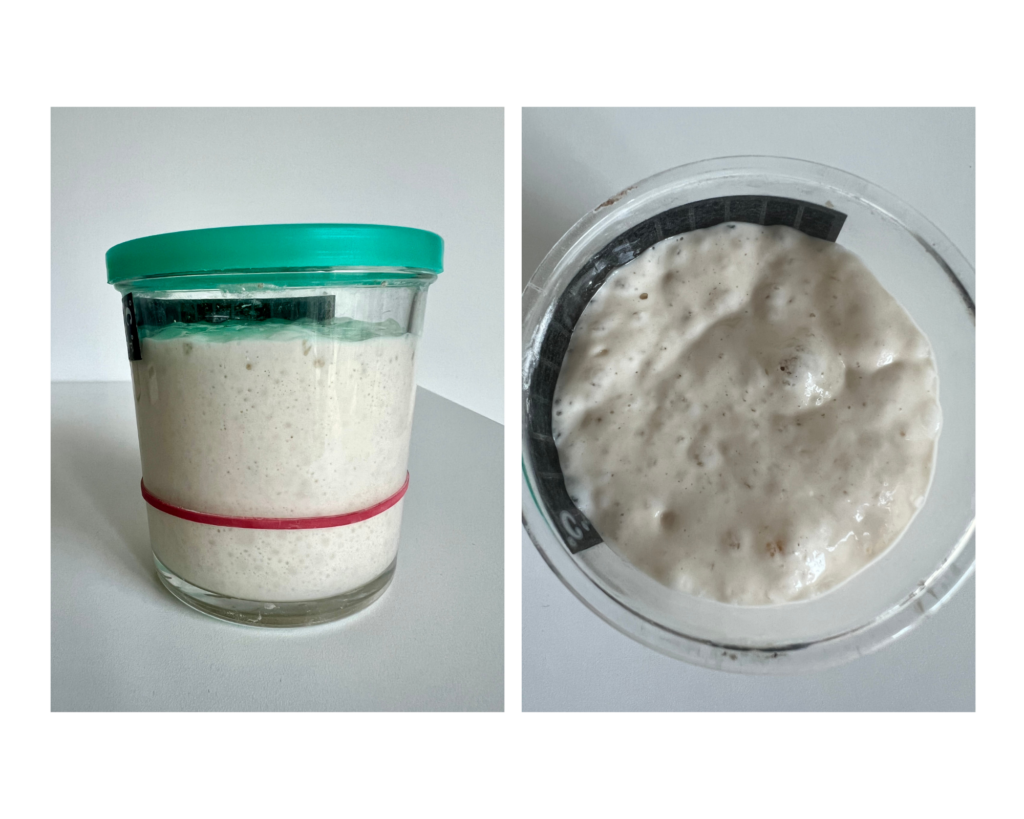
When the starter approaches peak activity, the structure becomes very airy and filled with gas. The surface often develops a gentle dome as internal pressure pushes upward.
The rise slows down slightly because the starter is approaching its maximum expansion.
Stage 4 — Peak
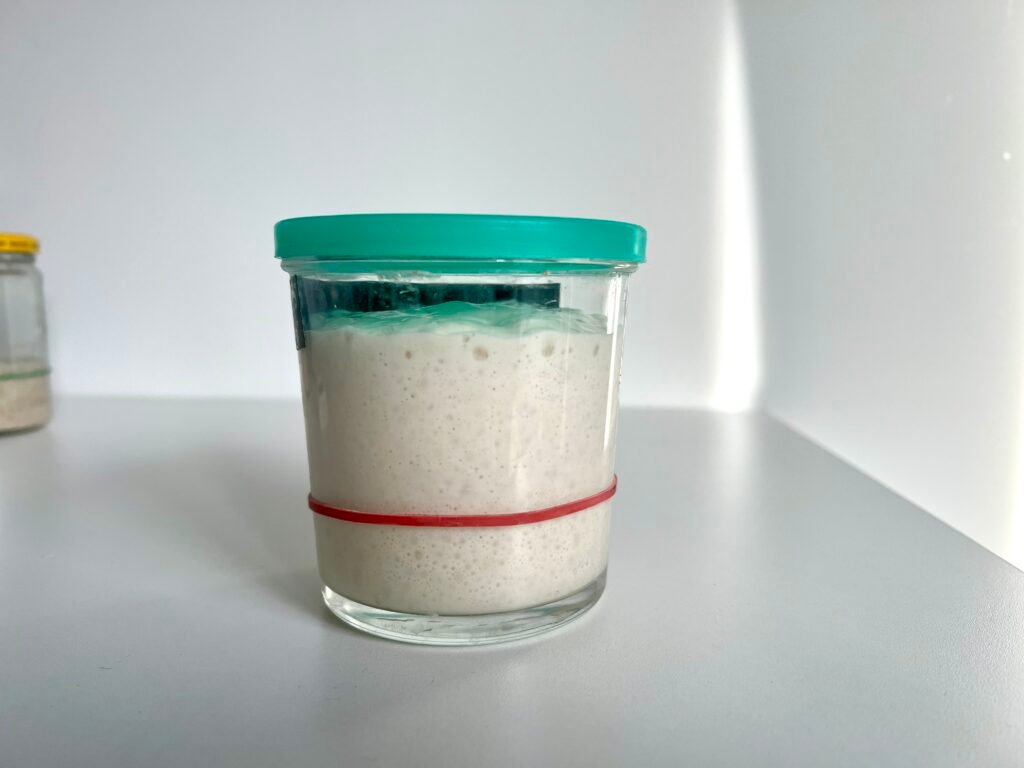
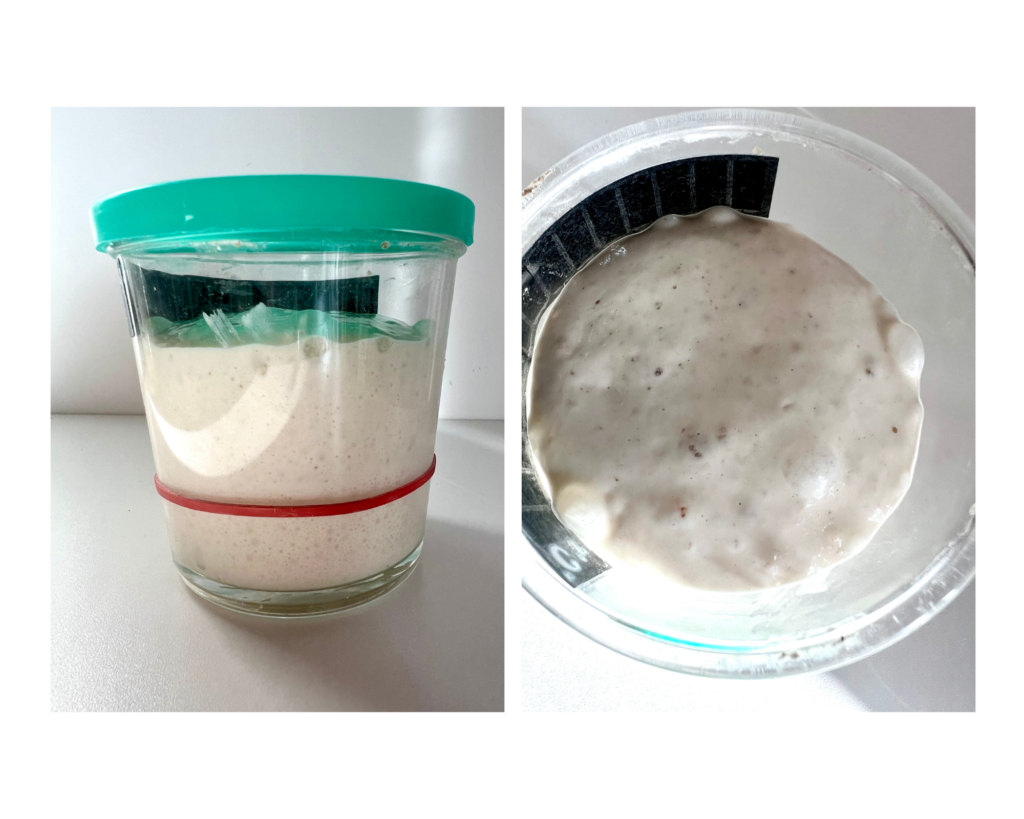
Peak is the moment when the starter reaches its highest point. The jar appears full of bubbles and the structure looks light and expanded.
At this stage bubbles are typically visible throughout the entire height of the starter, showing that fermentation has fully expanded the structure.
The dome that formed earlier often begins to flatten. The surface may look slightly leveled rather than strongly domed, indicating that the starter has reached its maximum expansion.
This is usually the moment when fermentation power is strongest and the starter is most suitable for baking.
What Happens After Peak
Shortly after reaching its highest point, the starter begins to lose structure. The dome flattens and the surface may start to sink slightly. This indicates that the microorganisms have already consumed much of the available food and fermentation rate begins to decline.
For most sourdough breads, the best moment to use a starter is at peak or just before it begins to fall.
Quick Visual Guide
| Stage | What you see | What it means |
|---|---|---|
| Early rise | Small bubbles, slight expansion | Fermentation has started but activity is still low |
| Active rise | Many bubbles, rapid increase in height | Microbial activity is strong |
| Near peak | Dome forming, very airy structure | Starter is close to maximum activity |
| Peak | Maximum height, very bubbly structure, the top begins to flatten | Best moment to bake |
Why Learning These Stages Matters
Relying only on doubling can be misleading. Depending on flour, temperature, and hydration, a starter may double before it reaches peak fermentation or continue rising long after doubling.
Observing the structure, bubbles, and surface shape provides a much more reliable way to judge readiness. Once you become familiar with how your starter moves through these stages, it becomes much easier to plan fermentation and bake consistently good sourdough bread.
Want to catch your starter exactly at peak?
Smart Sourdough helps you track starter feeding, estimate peak timing, and plan fermentation more precisely.